Assembly Fixtures Manufacturer in Pune
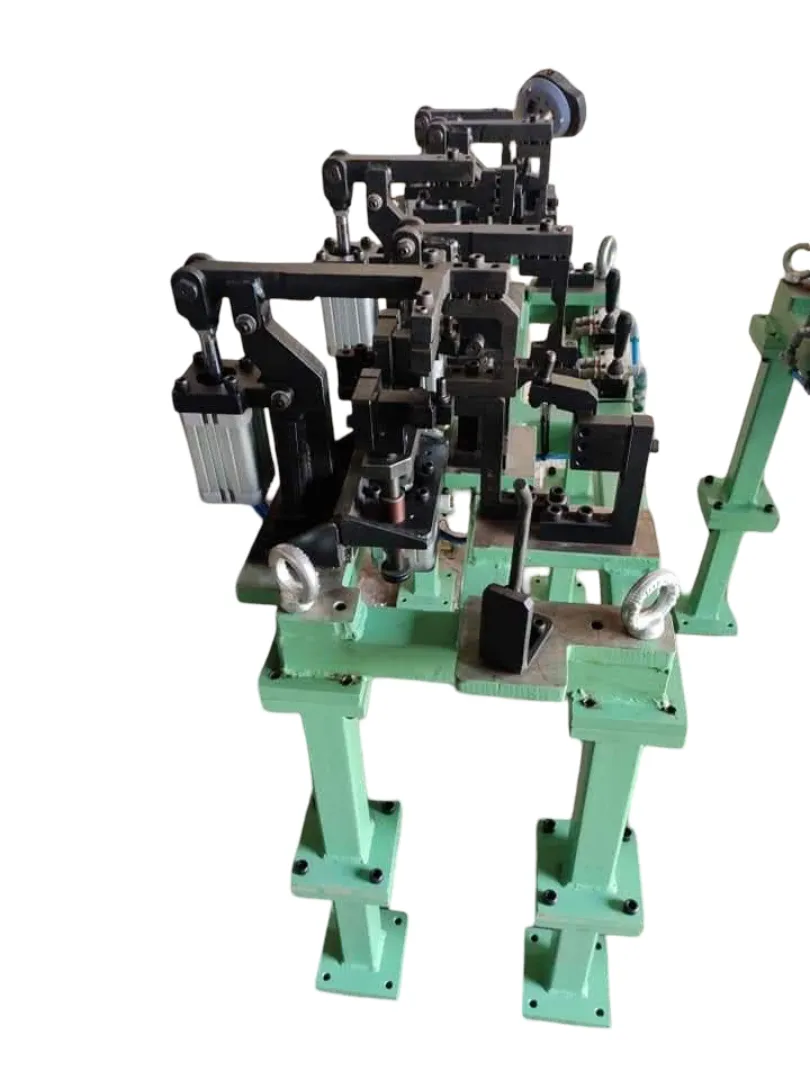
Assembly Fixtures in Pune
Siddhivinayak provides assembly fixtures in Pune.
Putting two parts together correctly once isn't hard. Doing it the exact same way a few hundred times a day, without anyone thinking twice about it, is a different problem entirely and that's what an assembly fixture is actually for.It holds components in place while they're joined, so nobody's eyeballing alignment on unit number 340 the way they might have on unit number one. Siddhivinayak Engineering has been building fixtures like this out of the Bhosari Industrial Area in Pune since 2016, alongside its welding, inspection, and BIW fixture work. The approach doesn't really change across any of it: hold the tolerance, hit the delivery date, and don't let the cost run away.
What Is an Assembly Fixture, and Why Choose One?
At its core, it's just a holding device that keeps two or more components lined up correctly while they get bolted, riveted, pressed, glued, or fitted together whatever the joining method happens to be. Instead of an operator lining parts up by feel, the fixture puts everything where it needs to be automatically, so the assembly comes out the same way every single time.
That consistency ends up mattering more than people expect going in. A product only works the way it's supposed to if its parts are actually aligned right, and a bracket that's a couple of millimetres off, or a fastener hole that doesn't quite line up, doesn't always get caught right away. Sometimes it turns into a rejected unit on the spot. Other times it slips through and becomes a field failure months later, which is a much more expensive way to find out something was off.
A well-built assembly fixture generally helps manufacturers:
- Keep every assembled unit aligned the same way, not just the first few
- Cut down on rework that traces back to misaligned parts
- Move faster through each assembly cycle
- Rely less on any one operator's skill or experience
- Work across manual stations as well as automated lines
- Hold quality steady across long production runs
Applications of Assembly Fixtures
Assembly fixtures are used across diverse manufacturing and joining environments to guarantee consistent alignment. Key applications include:
Multi-Component Assembly
Several parts get held in their correct relative position while they're joined into a sub-assembly or a finished unit.
Capital Equipment Assembly
Heavier components need accurate positioning during the build of machinery, panels, or larger structural assemblies.
Fastening and Riveting Operations
Parts stay steady and aligned while bolts, screws, or rivets go in, so hole positions don't drift from one unit to the next.
Press-Fit and Bonding Applications
Components get held under the pressure or clamping force a press-fit or adhesive bonding step actually needs.
Automated Assembly Lines
Stable, repeatable positioning that a robotic arm or automated fastening system can work with reliably.
Sub-Assembly Staging
Partially built assemblies get held in position before moving on to the next station further down the line.
Salient Features of Assembly Fixtures
Key features that ensure our assembly fixtures deliver shop-floor reliability, durability, and repeatability include:
- Custom Locating Arrangements: Locating points come from the actual components being assembled, not a generic layout adapted after the fact.
- Rigid Base Construction: A stable frame keeps things from flexing under clamping force, even after months of daily use.
- Quick-Load and Quick-Release Clamping: Faster loading and unloading means less dead time between one assembly and the next.
- Compatibility With Manual and Automated Stations: The same design principles apply whether it's a hand-assembly bench or a robotic fastening cell.
- CAD/CAM-Based Design: Clamping points and part positioning get worked out on screen first, before anything's actually machined.
- Application-Specific Configuration: Every fixture is built around its own components, assembly sequence, and production volume — nothing's copy-pasted from a template.
Benefits of Assembly Fixtures
Investing in precision-designed assembly fixtures offers tangible operational and quality benefits:
Fewer Assembly Errors
Fixed locating points take the guesswork out of alignment, so misassembled or misaligned units become the exception rather than something to budget for.
Faster Cycle Times
Quick-load clamping and pre-set positioning trim time off each assembly step, and that adds up fast across a full shift.
Consistent Output Across Operators
Because the fixture handles the positioning, results stop depending on how careful or experienced whoever's on shift happens to be.
Lower Rework and Scrap Costs
Catching an alignment problem before assembly is finished costs a lot less than reworking or scrapping a completed unit later.
Easier Scale-Up
A fixture built with some headroom makes it simpler to add stations or ramp up volume without redesigning the whole process from scratch.
Direct Manufacturer Support
Going straight to the people who designed and built the fixture usually means quicker answers when something needs adjusting.
Assembly Fixtures Manufacturer and Supplier in Pune
Siddhivinayak Engineering works as an Assembly Fixtures Manufacturer and Supplier in Pune, building fixtures for manufacturers who need components positioned accurately and repeatably, whether that's for capital equipment, sub-assemblies, or finished products. Before any design work starts, the team goes through the customer's component drawings, assembly sequence, and expected production volume to figure out what the fixture actually has to do.
Fixtures go out for manual assembly stations as well as automated and semi-automated lines, and depending on what's needed, they can include pneumatic or manual clamping, precision locating pins, and layouts built to work alongside robotic fastening equipment.
Manufacturing, supply, and job work all sit under the same roof here, and the goal doesn't change across any of it — build something that holds up to daily production, not just a one-off trial run. Whether it's a single-station fixture or a full line setup, the design starts from the actual application rather than a standard layout pulled off the shelf.
Frequently Asked Questions
1. What is an assembly fixture used for?
It holds two or more components in their correct position relative to each other during assembly, so parts get joined consistently instead of depending on manual alignment every time.
2. How is an assembly fixture different from an inspection fixture?
An assembly fixture positions parts so they can be joined together. An inspection fixture positions a finished or in-process component so it can be checked against its design tolerances. They often work side by side on a line, but they're solving two different problems.
3. Can assembly fixtures be built for automated or robotic lines?
Yes, fixtures can be designed with the clearance and interfacing that robotic arms or automated fastening equipment need, on top of standard manual station setups.
4. Are assembly fixtures only used for automotive components?
Not at all. Automotive and capital equipment assembly come up often, but the same principle applies to any product built from multiple parts that need consistent, repeatable positioning.
5. Why choose Siddhivinayak Engineering for assembly fixtures in Pune?
Because fixture design and manufacturing has been the company's core focus since 2016, not something added on the side, the same cost-quality-time discipline that runs through its welding, inspection, and BIW fixture work applies here too, for manufacturers who need equipment that holds up to daily production use.