Hydraulic Fixtures Manufacturer in Pune
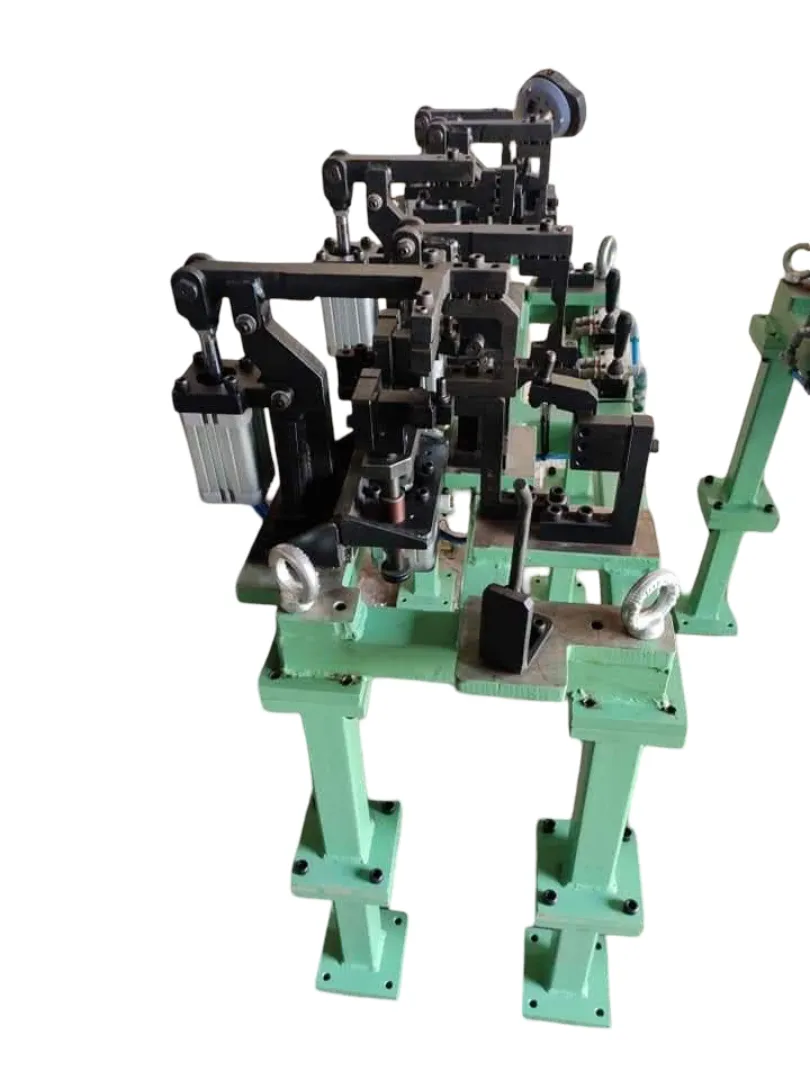
Hydraulic Fixtures in Pune
Siddhivinayak is best hydraulic fixtures manufacturer in Pune.
Manual clamping works fine right up until a production line needs to hold the same part the same way, hundreds of times a shift, without an operator's grip strength becoming part of the tolerance chain. That's usually the point where a shop starts looking at hydraulic fixtures instead.Siddhivinayak Engineering has been building fixtures out of the Bhosari Industrial Area in Pune since 2016, and hydraulic clamping sits alongside its welding, inspection, BIW, and assembly fixture work as one more way of solving the same underlying problem: hold a component accurately, hold it consistently, and don't let the clamping method itself become the thing that drifts.
What Is a Hydraulic Fixture, and Why Choose One?
A hydraulic fixture uses pressurized hydraulic fluid, rather than a manually operated screw, lever, or toggle, to generate and hold clamping force on a component during machining, welding, or assembly. Because the clamping force comes from hydraulic pressure rather than an operator's arm, it stays consistent from the first part of a shift to the last, and it can be applied at multiple points on a component simultaneously through a single pump or power pack.
That consistency matters more than it might sound like at first. A manually clamped fixture depends on whoever's tightening it that day, and grip strength, fatigue, and plain inattention all introduce variation a hydraulic system doesn't have to deal with. On multi-point clamping jobs especially, where a component needs even pressure across several locations at once, doing that manually is slow and genuinely hard to get consistent. A hydraulic circuit does it in one stroke, at the same pressure, every single time.
Choosing the right hydraulic fixture can help manufacturers:
- Apply consistent, repeatable clamping force across every cycle
- Clamp multiple points on a component simultaneously through one pump
- Cut cycle time on high-volume machining and welding operations
- Reduce operator fatigue on jobs requiring frequent clamp and unclamp cycles
- Improve part positioning accuracy during machining or welding
- Support automated or semi-automated production lines
Applications of Hydraulic Fixtures
Hydraulic fixtures are used across heavy-duty machining, automated welding, and high-volume assembly lines. Key applications include:
CNC Machining Fixtures
Holding components steady under cutting forces during milling, drilling, and turning operations.
Welding Fixtures
Providing firm, even clamping to keep components positioned correctly through heat and vibration during welding.
Multi-Point Clamping Setups
Applying even pressure across several locations on a single component through one hydraulic circuit.
High-Volume Production Lines
Reducing clamp-unclamp cycle time on jobs where the same fixture gets used hundreds of times a shift.
Automotive Component Assembly
Holding engine, transmission, and body components in place during assembly and sub-assembly operations.
Automated and Robotic Cells
Integrating with automated production lines where clamping needs to trigger and release without manual intervention.
Salient Features of Hydraulic Fixtures
Key features that make our hydraulic fixtures dependable, rigid, and efficient under demanding manufacturing conditions include:
- High Clamping Force: Hydraulic pressure generates significantly more clamping force than manual clamps of a comparable size.
- Simultaneous Multi-Point Clamping: A single hydraulic circuit can actuate multiple clamps at once, keeping pressure even across the component.
- Consistent, Repeatable Pressure: Clamping force stays the same cycle after cycle, regardless of how many times the fixture's been used that shift.
- Compact Cylinder and Clamp Design: Hydraulic clamps deliver high force from a relatively small footprint, which matters on space-constrained fixtures.
- Manual, Semi-Automatic, and Automated Configurations: Fixtures can be built with manual valve control or integrated into fully automated clamp-release cycles.
- Application-Specific Design: Cylinder placement, clamping sequence, and locating points are worked out around the actual component and process.
Benefits of Hydraulic Fixtures
Investing in precision-designed hydraulic fixtures delivers tangible shop-floor performance and reliability benefits:
Faster Cycle Times
One hydraulic stroke clamps multiple points at once, instead of an operator tightening several manual clamps in sequence.
Reduced Operator Fatigue
Hydraulic actuation removes the physical effort of manual clamping across a full shift of repeated cycles.
Improved Part Accuracy
Even, repeatable clamping pressure reduces the part distortion and positioning error that inconsistent manual clamping can introduce.
Lower Long-Term Wear
Controlled hydraulic force reduces the wear and damage that comes from over-tightening or uneven manual clamping.
Better Fit for Automation
Hydraulic circuits integrate more naturally with automated and robotic production cells than manual clamping does.
Direct Manufacturer Support
Working with the fixture's original designer means faster turnaround for maintenance, seal replacement, or a configuration change.
Hydraulic Fixtures Manufacturer and Supplier in Pune
Siddhivinayak Engineering works as a Hydraulic Fixtures Manufacturer and Supplier in Pune, building clamping fixtures for automotive OEMs, machining job shops, and assembly line operators who need reliable, repeatable clamping on high-volume production work. Before any design work starts, the team goes through the component's geometry, the clamping points it actually needs, and the cycle time the line is targeting, to work out how many cylinders the job needs and where they should sit.
Fixtures go out built around single or multi-point hydraulic clamping, with configurations suited to manual valve operation or integration into a fully automated cycle, depending on how the line is set up. Cylinder sizing, clamp sequencing, and locating points are all worked out for the specific component rather than adapted from a standard layout.
Manufacturing, supply, and job work all run out of the same facility, and the same cost-quality-time approach that runs through the company's welding, inspection, and assembly fixture work applies here too. Whether it's a single-cylinder fixture for a low-volume job or a multi-point clamping setup for a full production line, the design starts from the actual component and process rather than a generic fixture template.
Frequently Asked Questions
1. What is a hydraulic fixture used for?
It holds a component in place during machining, welding, or assembly using hydraulic pressure to generate clamping force, rather than a manually operated clamp.
2. How is a hydraulic fixture different from a manual clamping fixture?
A manual fixture depends on an operator tightening a screw, lever, or toggle by hand, so clamping force can vary person to person. A hydraulic fixture generates that force through pressurized fluid, so it stays consistent across every cycle and can clamp multiple points at once.
3. Can hydraulic fixtures be integrated into automated production lines?
Yes. Hydraulic circuits can be configured for manual valve control or integrated into a fully automated clamp-and-release cycle, depending on how the production line is set up.
4. Are hydraulic fixtures only used in high-volume production?
High-volume lines see the biggest benefit, since cycle time and consistency matter most there, but hydraulic clamping is also used on lower-volume jobs where multi-point or high-force clamping would be impractical to do manually.
5. Why choose Siddhivinayak Engineering for hydraulic fixtures in Pune?
Because fixture design has been the company's core focus since 2016, built on the same cost-quality-time discipline used across its welding, inspection, BIW, and assembly fixture work, for manufacturers who need clamping that holds up to daily high-volume production use.